
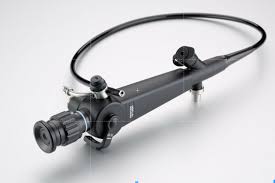
A patient with a fractured tracheal stent experienced persistent mucosal oozing and fresh blood flow upon repeated suction even after snare resection, cryotherapy, and thermal ablation of a proximal neoplasm—a scenario all too familiar to respiratory interventional physicians. Traditional hemostatic methods often require repeated interventions, prolonging surgical time and increasing patient risk.
After spraying Xunning with a dedicated applicator, a gel layer formed in just 9.19 seconds, and the oozing stopped immediately. The postoperative observation time was significantly reduced, and the patient recovered well.
01 Clinical Dilemma: The Challenge of Hemostasis in Respiratory Interventional Surgery
In respiratory interventional surgery, achieving hemostasis has always been a major challenge for clinicians. Particularly after high-risk procedures such as tumor ablation, biopsy sampling, and stent placement, mucosal oozing and minor active bleeding frequently trouble surgical teams.
While this “minor bleeding” may seem non-life-threatening, its cumulative effect can lead to airway blood accumulation, blurred visual field, and even compromise respiratory function.
Traditional hemostatic methods like balloon occlusion and thermal ablation (e.g., APC) are effective but involve complex operations, may damage normal tissue, and struggle to achieve uniform coverage on uneven wound surfaces.
Respiratory interventional procedures often need to be performed within the narrow confines of the airway, making the precise delivery of hemostatic materials a technical key. Achieving effective hemostasis in a short time without affecting subsequent treatment has become an urgent clinical problem to solve.
02 Core Applications: Precisely Targeting Three Major Bleeding Scenarios
Based on the clinical practice of Deputy Director Li Peng from Shengjing Hospital Affiliated with China Medical University, Xunning is primarily suitable for three typical bleeding scenarios in respiratory intervention:
First, surface oozing after tumor ablation. This includes scenarios like neoplasm ablation after tracheal stenting, resection of neoplasms in lung basal segments, or ablation of large occupying lesions in the main bronchus, where the post-procedural wound often exhibits persistent oozing.
Second, post-biopsy bleeding. This encompasses needle tract bleeding or surface oozing following puncture biopsies or tissue sampling. It is especially suitable for situations where oozing persists unabated, preventing rapid extubation.
Finally, supplementary hemostasis. When residual oozing remains after primary hemostatic methods like balloon occlusion or thermal ablation, Xunning can be used as a supplementary measure, reducing the workload of secondary intervention and improving surgical efficiency.
The common feature of these scenarios is the need for a fast, precise, and safe hemostatic solution, and the physical properties of Xunning perfectly meet these demands.
03 Case Evidence: Hemostatic Performance in Three Typical Scenarios
In the case involving a fractured tracheal stent combined with neoplasm ablation, the patient had persistent mucosal oozing that was difficult to control with traditional methods. After spraying Xunning via a dedicated applicator, a gel layer formed in just 9.19 seconds, stopping the oozing immediately.
Following resection of a neoplasm in the right lower lung basal segment under rigid bronchoscopy, the wound surface was uneven with significant fresh oozing. Xunning achieved uniform coverage over the entire wound surface. The oozing stopped rapidly, with no postoperative rebleeding or adverse reactions like mucosal edema.
For recurrent oozing after ablation of a large occupying lesion in the left main bronchus, minor bleeding persisted after the initial Xunning spray. A supplementary spray resulted in a significant hemostatic effect. Notably, even when the material incidentally contacted normal bronchial tissue, it did not cause airway stenosis.
These three cases collectively confirm Xunning’s applicability and effectiveness in complex airway environments, enabling rapid hemostasis even on uneven or difficult-to-access wound surfaces.

04 Technological Innovation: The Scientific Principle Behind Rapid Gel Formation
Xunning’s ability to form a hemostatic gel layer within 9.19 seconds is based on a unique physical mechanism. Unlike traditional chemical coagulation, Xunning rapidly forms a physical barrier at the bleeding site by absorbing water from the blood.
This gel layer adheres tightly to the wound, achieving uniform coverage even on uneven surfaces. Once formed, the gel is not washed away by blood flow, providing sustained coverage and a lasting hemostatic effect at the bleeding site.
The material itself leaves no residue, causes no damage to normal tissue, and shows no adverse effects even with multiple sprays or minor incidental aspiration. This characteristic is particularly important in airway surgery, preventing complications like airway stenosis or foreign body reactions due to residual hemostatic material.
The design of the dedicated applicator ensures spraying precision. During the procedure, simply clearing the secretions allows for accurate spraying, enabling even novice physicians to master its use quickly.
05 Clinical Value: Enhancing the Safety and Efficiency of Respiratory Interventional Surgery
From clinical practice, Xunning demonstrates three core values in respiratory intervention: high hemostatic efficiency, reliable safety, and precise, convenient application.
Efficient hemostasis directly translates to reduced surgical time, decreasing patient anesthesia duration and surgical risk. Simultaneously, rapid hemostasis lowers the risk of airway blood accumulation due to persistent bleeding, enhancing procedural safety.
The material’s safety is evident not only in its lack of damage to normal tissue but also in the reliability of repeated use. Even in complex cases like ablation of a large occupying lesion in the left main bronchus, a supplementary spray achieved an excellent hemostatic effect.
The ease of operation allows more physicians to quickly master its use, lowering the technical barrier. The design compatible with endoscopic dedicated applicators ensures precise delivery within the narrow airway.
06 Industry Outlook: The Future Direction of Hemostasis in Respiratory Intervention
With the continuous advancement of respiratory interventional technology, the requirements for hemostatic materials are also increasing. Solutions like Xunning, which are fast, safe, and convenient, represent the future direction of hemostasis in this field.
In the future, hemostatic materials are likely to integrate with more interventional technologies, forming multimodal hemostatic protocols. For example, combining Xunning with biodegradable stents or drug-coating technologies could achieve dual effects of hemostasis and treatment.
The development of intelligent drug delivery systems is another potential direction. By monitoring bleeding in real-time and automatically adjusting drug spray, they could achieve precise, personalized hemostatic therapy.
As clinical data accumulates, the indications for Xunning may expand further, potentially applying not only to respiratory interventions but also to hemostatic needs in other luminal surgeries.
After surgery for ablation of a large occupying lesion in the left main bronchus, the oozing problem once concerned the surgical team. Minor bleeding persisted after the first Xunning spray. When a second supplementary spray was administered, the oozing completely stopped.
Stent placement proceeded smoothly, and the patient recovered well postoperatively. Most impressively, even incidental contact of the material with normal bronchial tissue caused no airway stenosis or adverse reactions.
From the laboratory to the operating room, Xunning has completed its technological translation. Investment hotlines are open. This “dark horse” in the field of respiratory intervention awaits further clinical validation.